
Most hand creams promise soft hands. But hands that split at the knuckles after a week on the tools need something different from hands that feel tight after a day of handwashing on a ward.
The best way to choose is to start with what your hands are doing right now, not with the product. This guide helps you match your symptoms, your work and our Australian climate to the ingredients that help, so you can pick the right cream the first time.
Not sure where to start?
Quick match: what do your hands need?
Choose by symptom
Very dry, tight hands
Dry hands have lost water and can’t hold on to it. A greasy layer on top won’t fix that on its own. You need ingredients that draw moisture into the skin, plus a light barrier to keep it there.
Look for: urea, a well-studied moisturising ingredient, sodium PCA, and dimethicone to seal moisture in without the oily feel.
Our pick: Tough Hands combines 10% urea with vitamin E, sodium PCA and dimethicone, and absorbs quickly without leaving hands greasy.
Learn more: The best cream for extra dry hands
Cracked or split fingers and knuckles
Cracks form when dry skin loses flexibility and splits under movement, which is why they turn up on knuckles and fingertips first. They sting, catch on fabric and can be slow to close if hands keep getting wet or dirty.
Look for: urea to soften and hydrate, vitamin E, and a barrier that stays put through handwashing.
Our pick: Tough Hands, applied two or three times a day and again at bedtime for the first week, then as needed.
Learn more: Hand cream for cracked fingers · Cracked skin
Rough, calloused hands
Calluses are thickened skin that builds up where hands take repeated pressure. A standard moisturiser sits on top of them. Softening them takes gentle exfoliation as well as moisture.
Look for: urea and alpha hydroxy acids (AHAs) such as lactic acid, which help loosen rough, built-up skin.
Our pick: Tough Hands contains both. Pair it with Tough Scrub, a walnut-shell hand scrub and wash, a few times a week.
Learn more: Calloused skin
Hands showing signs of ageing
Hands often show age before faces do, because they get more sun and more washing, and they rarely get the same care. Dryness makes fine lines look more obvious.
Look for: peptides, niacinamide and panthenol alongside moisturising ingredients. Daily SPF on the backs of your hands matters too.
Our pick: Tough Hands for Her combines 10% urea with peptides, niacinamide, panthenol and sweet almond oil, in a light gel-cream texture. It comes in the original scent plus Rose, Cherry Blossom and Green Tea.
Learn more: How to make your hands look younger
Sensitive or eczema-prone hands
If your skin reacts easily, fewer potential irritants is usually the safer place to start. Fragrance is one of the most common.
Look for: a fragrance-free formula with barrier-supporting ingredients. Always patch test first.
Our pick: Tough Hands Fragrance Free has the same 10% urea base as Tough Hands, without the fragrance.
Learn more: The best hand cream for eczema · Sensitive skin · Eczema and dermatitis
Hands dry from constant washing or sanitiser
Frequent washing strips the skin’s natural oils faster than they can be replaced. The trick is a cream that absorbs fast enough that you’ll actually reapply it after every wash.
Look for: fast-absorbing, non-greasy textures, and ideally no fragrance if you’re reapplying many times a day.
Our picks: Tough Hands Fragrance Free for frequent reapplication. Tough Shield, an alcohol-free sanitising hand cream, for times you can’t get to a sink.
Learn more: Creams for overwashed hands
Hand cream, hand balm or hand lotion: what’s the difference
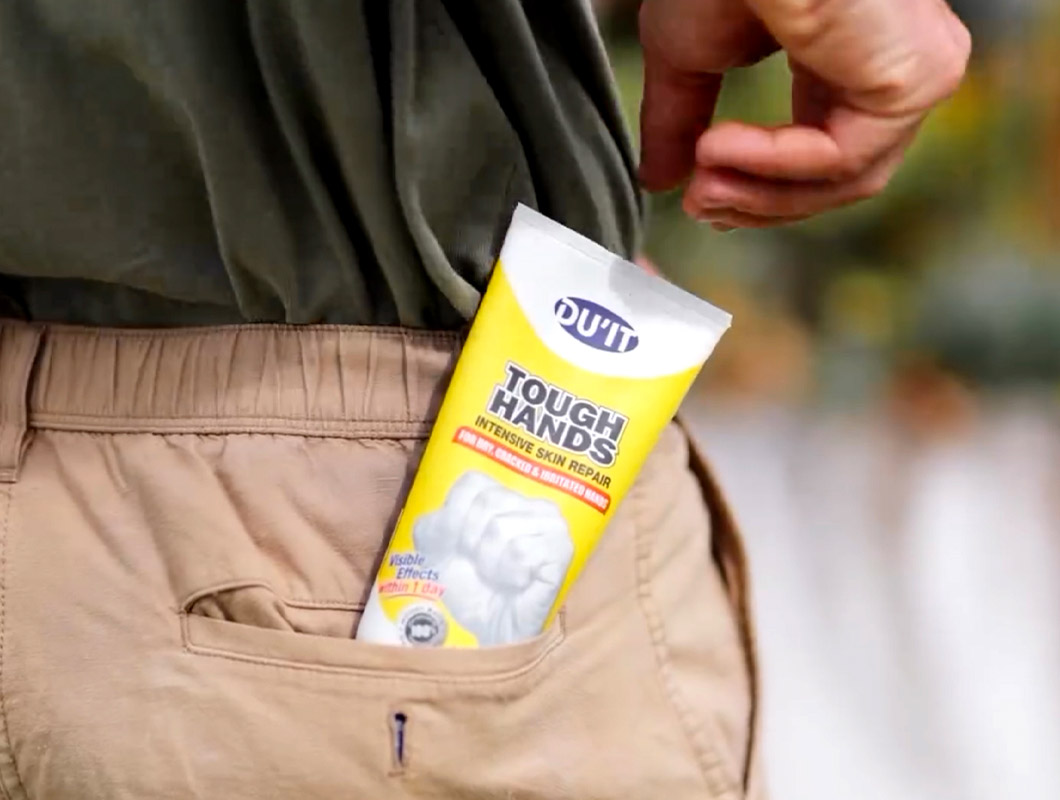
- Hand lotion is the lightest and contains the most water. It’s good for slightly dry hands and quick top-ups, but often not enough for real dryness.
- Hand cream sits in the middle. It hydrates and leaves a light protective layer, and suits most people for daily use.
- Hand balm is the richest, with little or no water and more oils and waxes. It’s best for very dry or exposed hands, but can feel heavy during the day.
For most dry Australian hands, a concentrated cream that absorbs well gives you the repair of a balm without the greasy feel. That’s what we designed Tough Hands to do.
Hand cream ingredients worth knowing

Urea: Draws moisture into the skin and softens rough patches
AHAs: Gently loosens dry, built-up skin
Dimethicone: Forms a breathable, non-greasy barrier
Vitamin E: Antioxidant that supports dry skin
Niacinamide: Supports the skin barrier and evens tone
Peptides: Support firmer, smoother-looking skin
Panthenol: Soothes and helps skin hold moisture
Choose by the work you do
- Nurses and healthcare workers: Constant washing and gloves call for fast-absorbing, fragrance-free care. Hand cream for nurses
- Tradies: Cement, solvents and rough materials mean cracks and calluses. Hand cream for tradies
- Gardeners: Soil, sun and water dry hands out fast. Hand cream for gardeners
- Hairdressers: Wet work and chemical exposure all day. Hand cream for hairdressers
Choose by season and climate
- Cooler, drier months: Low humidity and hot showers pull moisture from the skin. Use a richer amount at night and reapply after every wash. Winter hand care tips
- Hot and humid weather: Heavy creams feel uncomfortable, so people skip them. Use a small amount of a fast-absorbing formula, and keep hands protected from the sun.
How to get the most from your hand cream
- Apply to clean, dry hands. A pea-sized amount is usually enough. Concentrated creams can feel tacky if you overdo it.
- Work it into the problem areas: knuckles, fingertips, cuticles and the backs of your hands.
- Reapply after washing, not just once in the morning.
- Give it a week. For very dry or cracked hands, apply two or three times a day and at bedtime for seven days, then as needed.
- Overnight boost: apply a generous layer before bed and wear cotton gloves.
Hand cream FAQs
What’s the best hand cream for very dry hands?
One with a humectant like urea plus a light barrier ingredient such as dimethicone. Look for a concentrated cream rather than a light lotion.
Is hand balm better than hand cream?
Not necessarily. Balms are richer but heavier. A concentrated cream often gives similar repair and absorbs better for daytime use.
Can I use hand cream on my face?
Some people do, but hand creams are made for thicker skin. Use a dedicated face cream, like VE+ Vitamin E Face Cream, for your face.
How often should I apply hand cream?
After every handwash, and at least morning and night. Hands that are cracked or very dry benefit from more frequent use for the first week.
What hand cream is best for sensitive skin?
Start with a fragrance-free formula such as Tough Hands Fragrance Free, and patch test first.
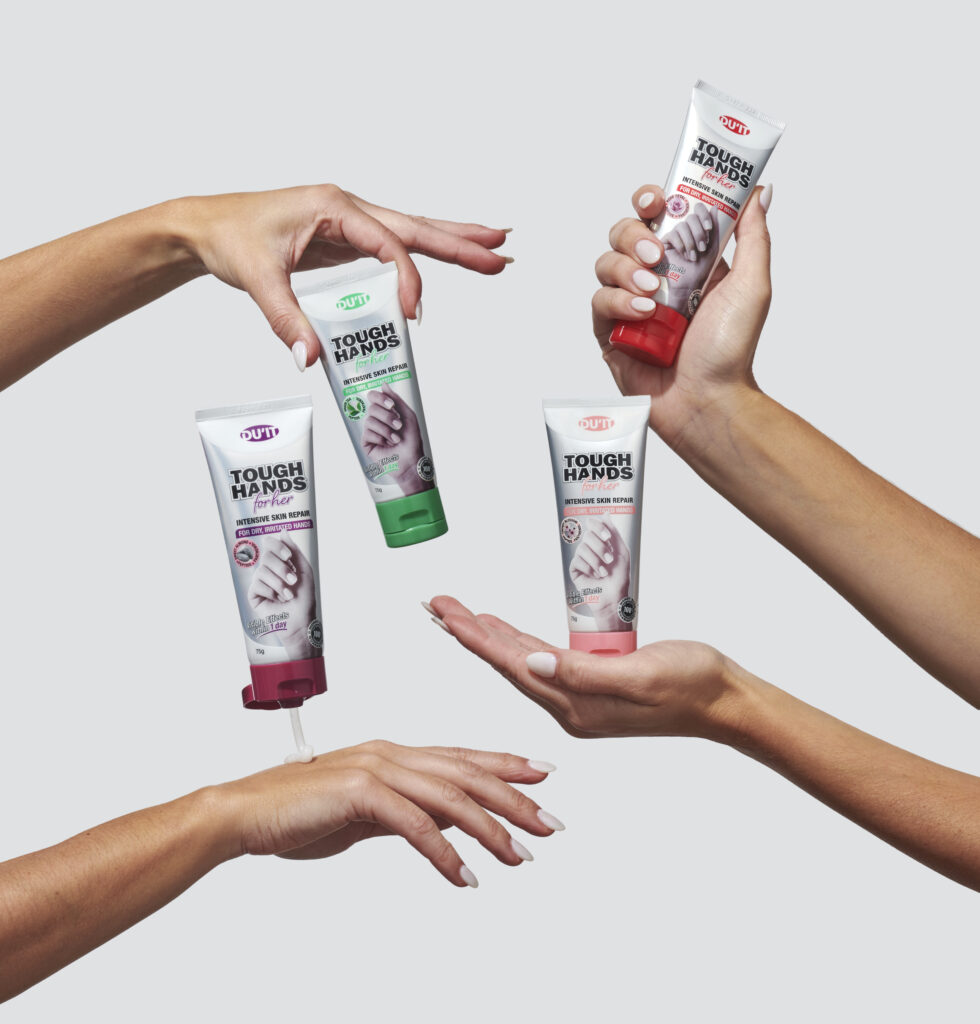
Still not sure which one is right for you?
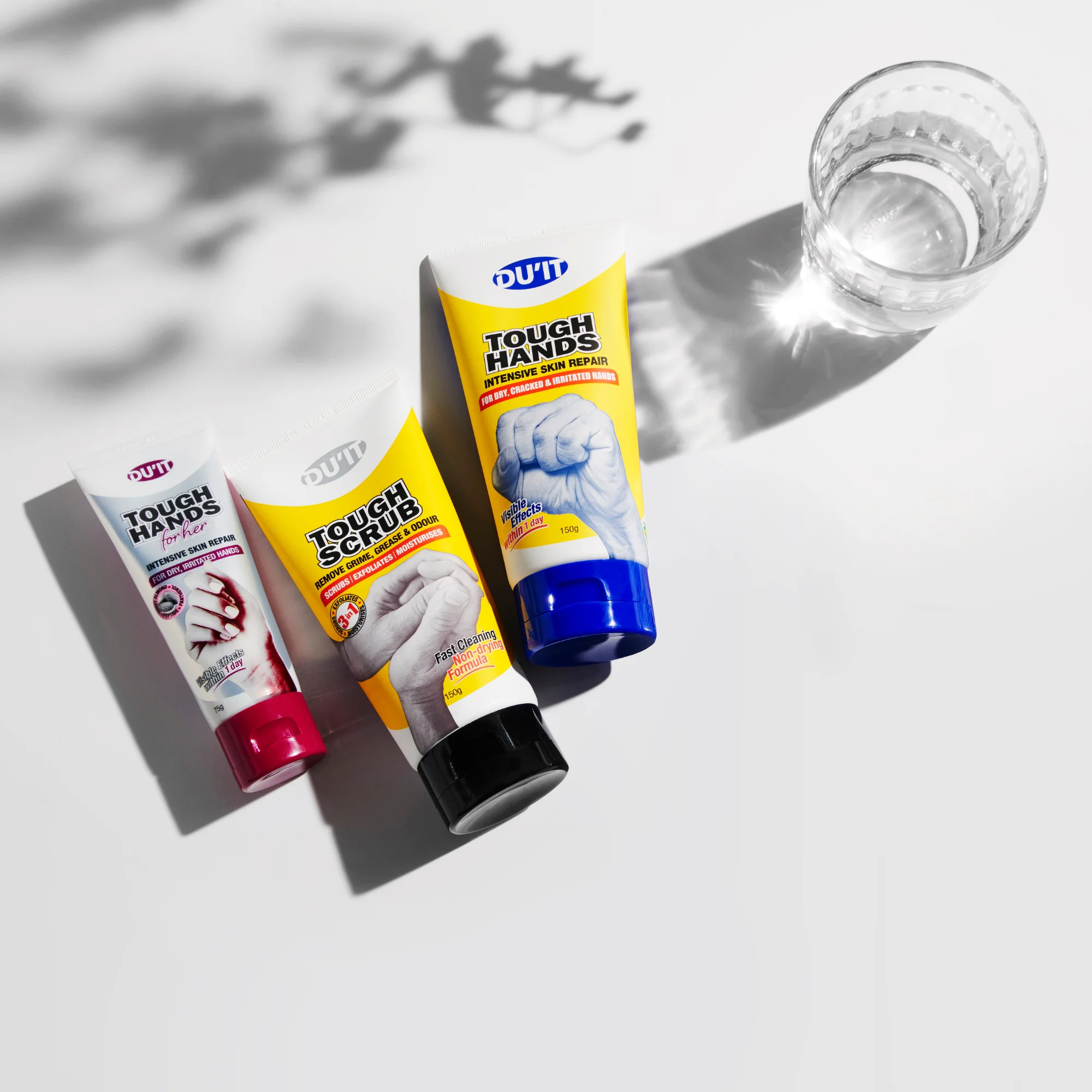
Want the full routine?
A complete Hand Rehab Kit that helps clean, exfoliate, repair, hydrate and protect dry, rough, cracked and irritated hands.

